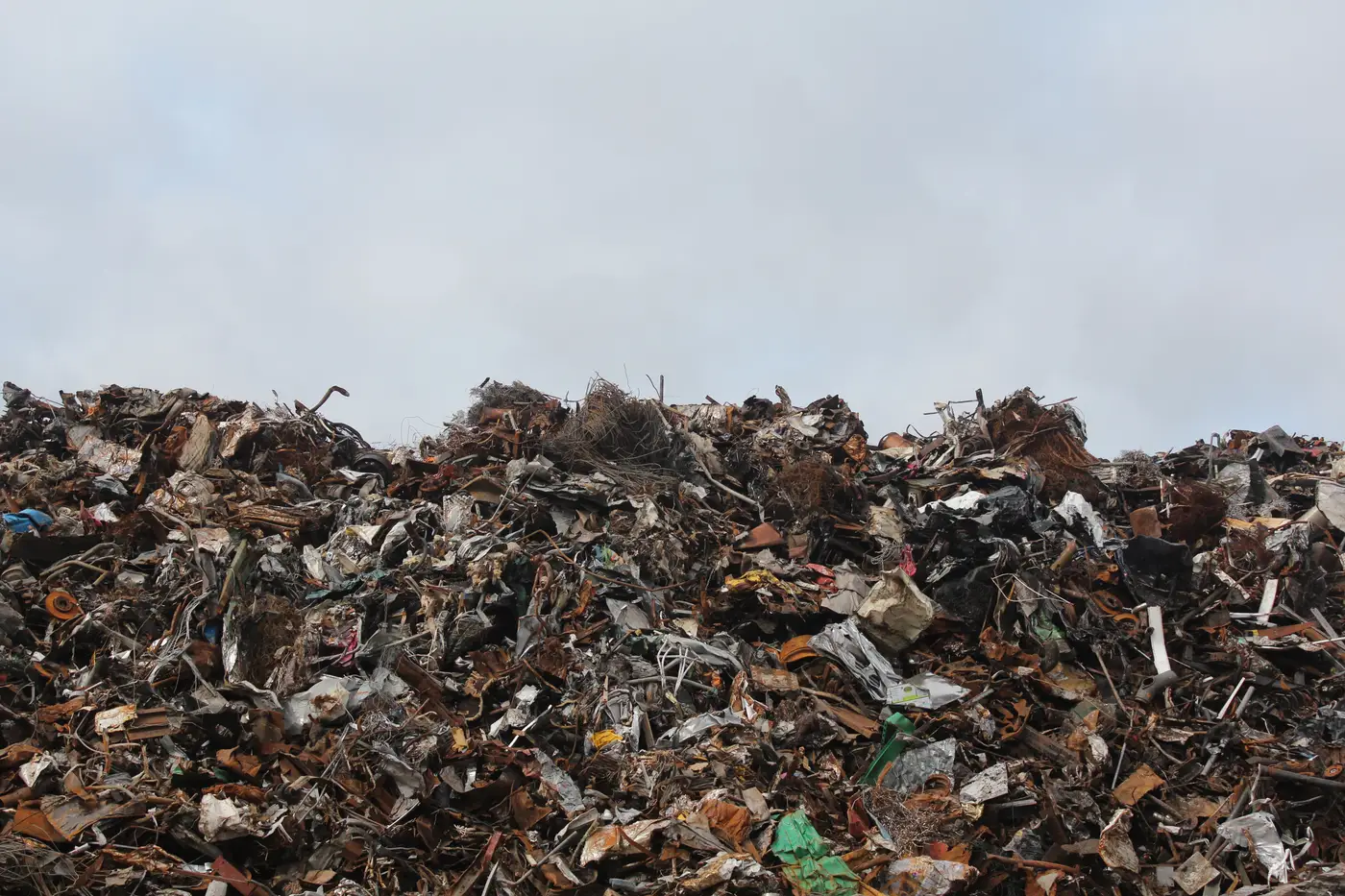
If you've ever pulled up a recent image of a yard before a site visit, you've probably already made a guess about what's in each bay just from the color and shape of the piles. That guess is usually right more often than not, and it's worth knowing why, and where it stops being reliable.
Color is the first tell, and it's mostly rust
Ferrous material oxidizes. A pile of structural steel, car bodies, appliances, or rebar that's been sitting for more than a few weeks picks up that rust-brown to orange cast, and it reads consistently across a whole pile because the surface weathering is uniform. Fresh ferrous cuttings or clean steel coil ends can still look gray or silver, so a brand-new drop won't always show the rust color yet, but most yard ferrous has had time to oxidize by the time it's imaged.
Non-ferrous piles tend to hold their color longer. Aluminum extrusions and cans stay bright and reflective, almost white in high sun. Copper wire and tubing run reddish-brown but with a shine that ferrous rust doesn't have. Brass and bronze sit yellowish. None of these oxidize the way steel does, so a non-ferrous bay tends to hold steady brightness from one image to the next, where a ferrous bay's tone shifts as new material gets added and old material weathers further.
Shape and pile geometry matter as much as color
Color alone isn't enough, because lighting, time of day, and sun angle all push the color read around. Geometry holds up better. Ferrous scrap that's been through a shredder, or shredder feed waiting to go in, piles up loose and irregular. You get mounded heaps with ragged edges and a rough, broken-up surface texture, car frames and white goods visible as individual shapes if the resolution is fine enough.
Baled non-ferrous, aluminum bales especially, stacks in uniform rectangular blocks with hard edges and consistent shadow lines between units. A bay full of bales reads as a grid. A bay full of shredder feed reads as a pile of rubble.
That distinction, baled vs loose, often tells you more about what's permitted to be stored where than the color does. If a permit condition requires non-ferrous to be segregated and baled before storage, and a bay is showing loose, mixed-texture material instead of stacked blocks, that's a geometry mismatch worth a closer look regardless of what color the pile is.
Where the overhead read runs out
A satellite or aerial image in RGB doesn't know alloy composition. It can't tell you that a gray pile is low-grade steel rather than an aluminum casting that hasn't picked up any brightness because it's covered in mill scale, and it can't see under a tarp or through a roof. Color and shape are proxies built from years of looking at yards, not a lab result. They're reliable enough to flag which bays deserve a walk and which probably don't, which is the actual job here: narrowing down where to point your boots, not replacing the visual confirmation you do on site.
That's the piece a monthly image can genuinely do well, though. A read across the whole yard that counts piles, estimates volume per bay, and flags where storage has grown or shifted since the last cycle gives you a starting point before you ever get out of the truck. That's the core of what Recycling Facility Map is built to deliver. It won't tell you an alloy grade, but it will tell you where a bay has gone from three stacks of bales to a sprawling loose pile since last month, and that's usually the bay a permit review needs to start with.
If your yard inspections keep turning into guesswork about what's piled up before you even arrive, it might be worth seeing what a monthly overhead read of the site can flag for you first.