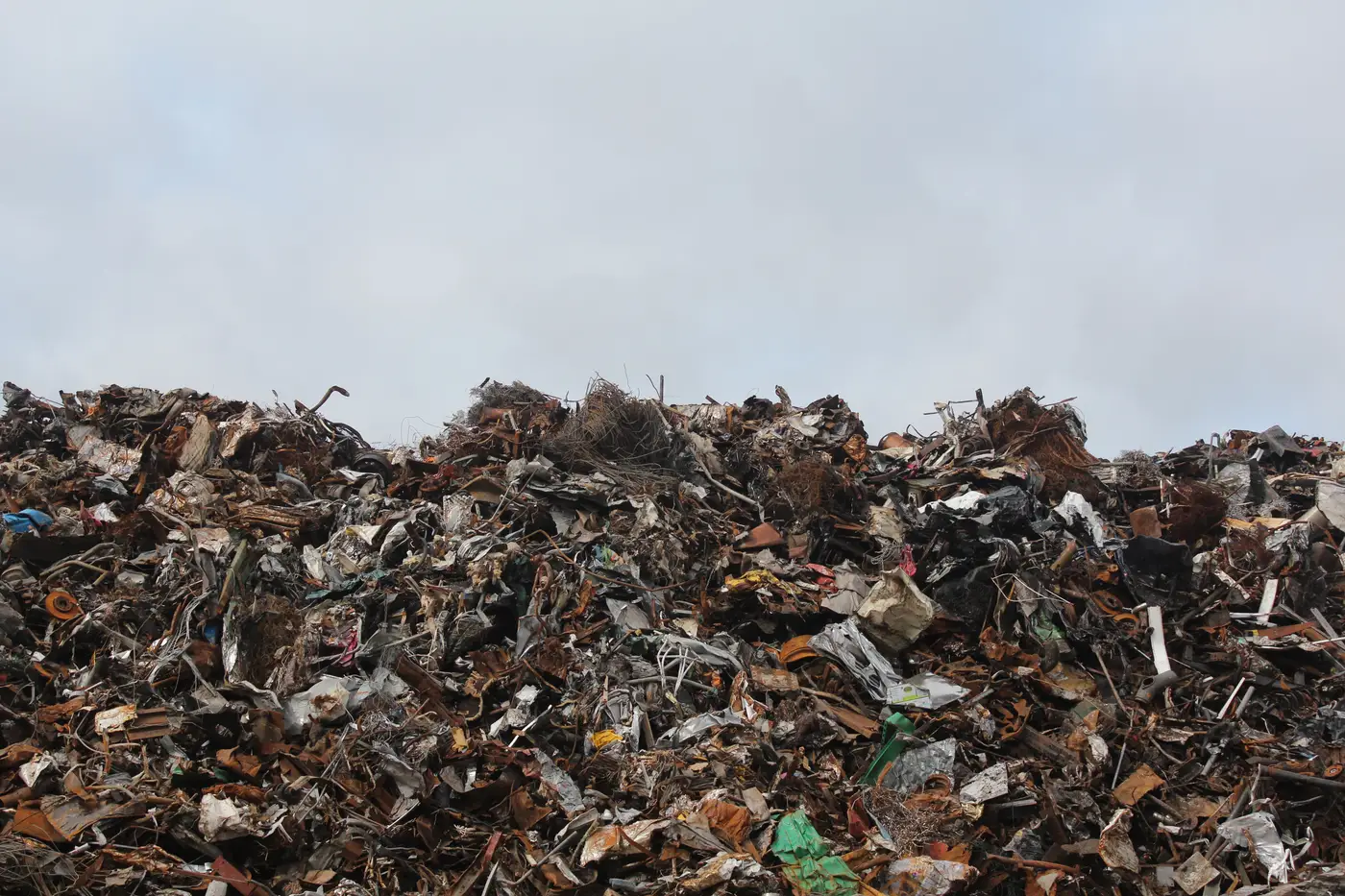
A permit file usually starts with one line that decides everything after it: what waste class is this facility authorized to accept. "Putrescible" and "non-putrescible" are labels that determine which operating conditions apply to the site in front of you, and which conditions on the page are leftover boilerplate from a template the agency reuses across permit types.
What "putrescible" means on the permit, not in the dictionary
Putrescible waste is anything that decomposes and, in doing so, creates odor, leachate, or a food source for vectors: food waste, biosolids, sewage sludge, dead animals, mixed MSW before it's screened. Non-putrescible covers material that sits there without breaking down: scrap metal, C&D debris, concrete and asphalt, clean wood, baled paper, plastic, glass. Most recycling and scrap facilities fall into the non-putrescible bucket, which is exactly why their permits read so differently from a transfer station or a biosolids site down the road.
Where the conditions split
Once you line the two permit types up side by side, the differences aren't subtle.
Storage duration. Putrescible facilities get clock-based limits: 24-hour or 48-hour turnaround, daily cover at a transfer station. Non-putrescible yards get volume- or time-based caps instead, often 180 days or a rolling annual limit on how long material can sit before it has to move.
Vector and odor plans. Required at putrescible sites as a standing condition, with logs an inspector checks against complaint records. You won't find this requirement on a scrap metal or C&D recycler's permit at all, because there's nothing there for a fly or a rat to want.
Setbacks. Putrescible operations typically carry wider buffer distances from residences, schools, and drinking water sources. Non-putrescible setbacks tend to be driven by noise and dust instead.
Fire and housekeeping conditions. This is where non-putrescible facilities pick up conditions a putrescible site never sees: pile height limits, aisle spacing between stockpiles, fire watch requirements for shredded metal or baled plastic. A biosolids permit has no equivalent clause, because fire risk isn't the hazard there, odor and leachate are.
Financial assurance. Closure and post-closure bonding tends to scale with putrescible content, since landfill gas and leachate liability run years past the day a site stops taking waste. A clean C&D recycler's bond calculation looks nothing like a biosolids composter's.
What this means when you're cross-checking the site
Pull the classification line first. If a facility is permitted non-putrescible only and you find food waste or biosolids mixed into a stockpile, write it up as a classification violation. A non-putrescible scrap yard sitting over its stockpile volume cap is a different finding: a storage violation against a measurable number. A putrescible site with the same stockpile height might also need the vector log, the odor complaint record, and the leachate sampling data pulled before you can call it compliant, because conditions stack there in a way they don't on a scrap yard.
For the non-putrescible side of that split, the thing you're actually checking is a number: how much material is on the ground against what the permit caps it at. Recycling Facility Map reads that from monthly high-resolution imagery, a stockpile count and volume estimate you can set next to the permit limit before you ever drive to the yard. It won't tell you anything about odor or vectors, that's a putrescible-site question and outside what satellite imagery can see, but for a scrap yard or C&D recycler's storage cap, it's a read you can run from the office.
If storage volume against the permit line is the thing you're chasing down, it's worth a look.