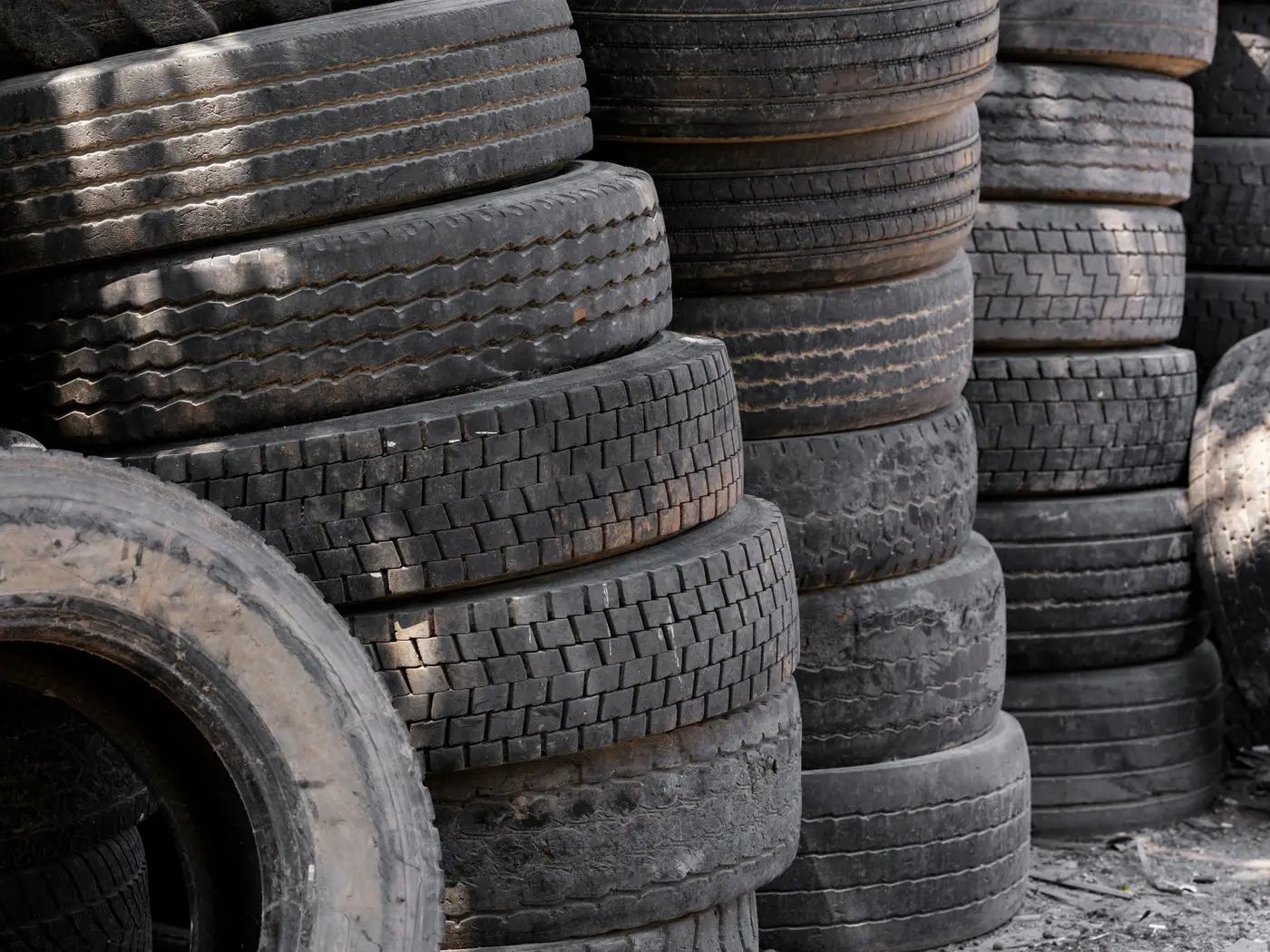
A waste tire pile storage limit is the maximum volume or count of tires a facility is allowed to keep on site at one time under its solid waste permit. It shows up as a number in the permit conditions, sometimes a tire count, sometimes a square footage or cubic yard figure, and it's one of the first things an inspector checks against what's stacked in the yard.
The limit isn't picked at random. It comes from two sources: the state solid waste program's scrap tire rules and the local fire code adopted for the facility. A permit writer takes whichever number is more restrictive and writes it into the permit conditions. That's why two yards in the same state carry different numbers. One is permitted under a general solid waste processing category with a tire-specific cap added as a condition. Another holds a dedicated waste tire facility permit with its own pile-size schedule.
Why the limit exists in the first place
Tire piles burn hot, burn long, and are miserable to put out. A fire department responding to an uncontrolled tire fire isn't dealing with a normal structure fire. They're dealing with something that can smolder for days, throw off oily runoff, and choke the area with smoke. NFPA 1 is where most of the outdoor tire storage provisions originate: pile dimensions, fire break spacing between piles, access lanes wide enough for apparatus, separation from property lines and exposures. State environmental agencies often adopt those fire code numbers wholesale into the solid waste permit rather than writing their own.
The other driver is vector control. A tire pile that sits too long and too dense holds water in the casings, and that's mosquito habitat. Some state programs set turnover requirements alongside the volume cap for exactly that reason, so a facility isn't just limited on how much it can store but on how long any given batch can sit before it has to move.
How the limit gets written into a permit
Expect one of a few formats, sometimes combined:
- A maximum tire count on site at any time (e.g., "no more than X whole tires").
- A maximum storage area in square feet, tied to pile height and spacing requirements from the adopted fire code.
- A maximum volume, usually cubic yards, for shredded or processed tire material that's different from the whole-tire limit.
- A throughput condition, capping how much can come in or how long it can sit, separate from the standing inventory limit.
Permits for facilities that only store tires temporarily before shipping them to a processor tend to lean on the throughput language. Permits for a facility doing on-site processing or long-term storage lean harder on the standing volume limit, because that's where the fire risk and the vector risk build up.
Checking the pile against the permit without walking every row
Knowing the number in the permit is the easy part. Getting a reliable read on what's on site between visits is harder: a pile can grow past the permitted volume in the weeks between inspections and look fine again by the time the next walk-through is scheduled. Physically counting or estimating a tire pile on foot is slow, and it only tells you about the day you showed up.
Recycling Facility Map was built around exactly that gap. It reads very-high-resolution satellite or aerial imagery of a yard on a monthly cadence and gives a count and volume estimate of material stored there, then checks it against what the facility's permit allows. It's a way to catch a pile that's crept past its limit between site visits, without scheduling a walk-through to find out.
If pile creep between inspections is a recurring headache on your tire sites, it's worth seeing what a monthly read from overhead shows.